


Land plots for sale in Croatia
/hr/prod/real-estate/14696/cover/agricultural-land-7168-m2-asphalt-access-sea-view.webp "Agricultural land 7168 m², asphalt access. Sea view.")
/central/prod/contact/37/01KFFPCGH78HYVDM5K33B56TDY/famalo.png "Famalo")
/hr/prod/real-estate/3552/cover_cleaned/blizna-gornja-building-land-2666-m2-developed-part-of-the-construction-zone.webp "Blizna Gornja, building land 2666 m2, developed part of the construction zone")
/hr/prod/real-estate/14728/cover/land-for-sale-radovin-1698-m2.webp "Land for sale Radovin 1698 m²")
/hr/prod/real-estate/3948/cover_cleaned/srima-vodice-building-land-with-project.webp "Srima, Vodice - building land with project")
/hr/prod/real-estate/3388/cover_cleaned/korcula-vela-luka-building-plot-1964-m2-first-row-to-the-sea.webp "Korčula, Vela Luka, building plot 1964 m2, first row to the sea")
/hr/prod/real-estate/3386/cover_cleaned/ciovo-okrug-gornji-building-plot-600-m2.webp "Čiovo, Okrug Gornji, building plot 600 m2")
/hr/prod/real-estate/14282/cover/land-for-sale-privlaka-582-m2.webp "Land for sale Privlaka 582 m²")
/hr/prod/real-estate/3510/cover_cleaned/vinisce-stari-trogir-bay-agricultural-land-837-m2-first-row-to-the-sea.webp "Vinišće, Stari Trogir bay, agricultural land 837 m2, first row to the sea")
/hr/prod/real-estate/3188/cover_cleaned/kastel-novi-rudine-building-land-835-m2.webp "Kaštel Novi, Rudine, building land 835 m2")
/hr/prod/real-estate/3216/cover_cleaned/trogir-surroundings-drvenik-mali-agricultural-land-200m-from-the-sea.webp "Trogir-Surroundings, Drvenik Mali, agricultural land, 200m from the sea")
/hr/prod/real-estate/3349/cover_cleaned/gornja-podstrana-gajine-agricultural-land-2602-m2-sea-view.webp "Gornja Podstrana, Gajine, agricultural land 2602 m2, sea view")
/hr/prod/real-estate/404/WODWW5VIKLBCQ2UQJHB5DG7NAL4L/elevated-seaside-plots-for-sale-near-rogoznica.jpg "Elevated Seaside Plots for Sale Near Rogoznica")
/hr/prod/real-estate/3191/cover_cleaned/kastel-novi-rudine-building-land-821-m2.webp "Kaštel Novi, Rudine, building land 821 m2")
/hr/prod/real-estate/3204/cover_cleaned/marina-building-land-974-m2-close-to-the-center-electricity-water-asphalt-road.webp "Marina, building land 974 m2, close to the center, electricity, water, asphalt road")
/hr/prod/real-estate/3362/cover_cleaned/seget-g-building-plot-749m2-with-sea-view-1km-from-the-sea.webp "Seget G., building plot 749m2 with sea view, 1km from the sea")
/hr/prod/real-estate/22401/cover/drvenik-veli-5-agricultural-plots-7917-m2.webp "Drvenik Veli, 5 agricultural plots 7917 m²")
/hr/prod/real-estate/14570/cover/building-land-400-m2-with-conceptual-design.webp "Building land 400 m² with conceptual design")
/hr/prod/real-estate/8622/cover/istria-kastelir-building-land-1180-m2.webp "Istria, Kastelir: Building land 1180 m²")
/hr/prod/real-estate/7848/cover/istria-nova-vas-building-land-for-duplex.webp "Istria, Nova Vas – Building land for duplex")
/hr/prod/real-estate/3540/cover_cleaned/marina-poljica-building-plot-850-m2-170-m-from-the-sea.webp "Marina, Poljica, building plot 850 m2, 170 m from the sea")
/hr/prod/real-estate/3285/cover_cleaned/klis-building-land-2300-m2.webp "Klis, building land 2300 m2")
/hr/prod/real-estate/2866/cover/land-kastelir-kastelir-labinci-1180m2.webp "Land Kaštelir, Kaštelir-Labinci, 1.180m2")
/hr/prod/real-estate/498/5MZXVINHQKYVWFXQNMDMYHUU8WPD/spacious-plot-for-sale-near-sea-in-primosten.jpg "Spacious Plot for Sale Near Sea in Primosten")
/hr/prod/real-estate/3516/cover_cleaned/omis-rogoznica-building-plot-1249m2-near-the-sea.webp "Omiš, Rogoznica - building plot 1249m2, near the sea")

What does your dream home look like? Tell us.
Sea view? Pool? Garden? Configure your ideal property in under 5 minutes and we'll bring you only what truly fits
Don't search for property. Let it find you.
Configure your ideal property for free and receive only matches that truly fit. No noise. No irrelevant listings.
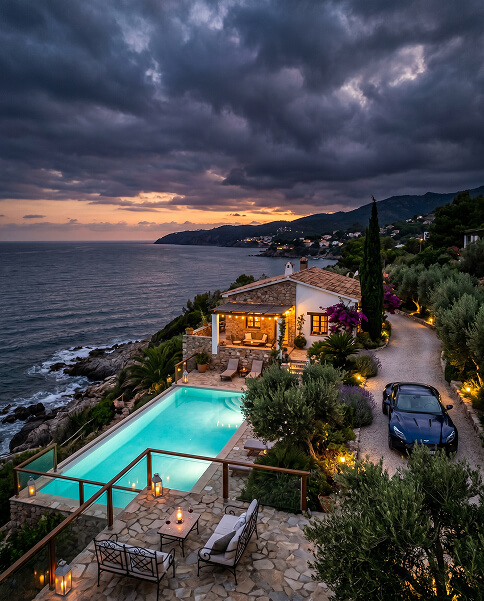
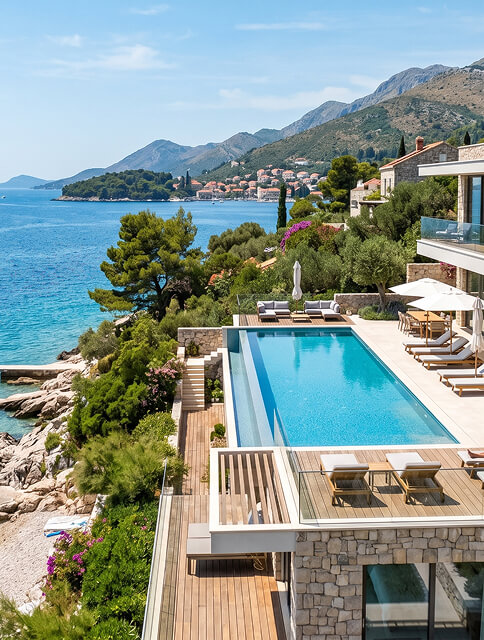
The Croatian coast, with its 1,200 islands, attracts investors not only to buy finished apartments but also to purchase building plots by the sea It has a typical Mediterranean climate. It has a typical Mediterranean climate. Key natural features include four national parks in Northern Dalmatia: Kornati, Krka, Velebit, and Paklenica. Instead of buying a villa, investors can find the perfect plot of land in Croatia and build your own property for sale with a sea view.Investing in land for sale in Croatia on the Adriatic combines capital security with a unique lifestyle. Buying land is one of the most stable investments due to strong demand.Building land for sale by the sea is the highest-priced category. The average price for 2024 in premium locations is around €121.32/m². The most attractive investment locations are Split, Makarska, and Dubrovnik.
Popular regions for seaside real estate in Croatia
The Croatian coast, stretching from Istria to southern Dalmatia, offers extensive opportunities for building plots for sale by the sea. Investors most often focus on three main regions:IstriaIstria, known as the "green and blue rhapsody," is the largest peninsula and people refer to it as the "Land of Magic." It is a land of contrasts, from historical monuments to picturesque islands and an inland rich in truffles (Buzet).- Cultural centers: Pula (Roman amphitheater), Poreč (Euphrasian Basilica, UNESCO World Heritage Site) and romantic Rovinj.- Nature: Brijuni National Park and Učka Nature Park, which connects Istria with Kvarner.KvarnerKvarner is one of the oldest tourist regions, comprising the islands of Krk, Cres, Lošinj, and Rab. The region combines sea and mountains.- Centers: Luxurious Opatija with its Lungomare promenade and Rijeka, the center of Kvarner and the largest port on the Adriatic.- Inland: Gorski Kotar, nicknamed "Croatian Narnia," offers skiing and includes Risnjak National Park.- Accessibility: The island of Krk connets to the mainland by a bridge, which is an advantage for landowners.DalmatiaDalmatia is a historical and geographical region stretching 400 km along the Adriatic Sea. The Illyrian tribe of Delmati named it. It is divided into three subregions (Northern, Central, Southern) with the main centers of Zadar, Split, and Dubrovnik.UNESCO sites: Diocletian's Palace in Split, the massive walls of Dubrovnik, and St. James's Cathedral in Šibenik. Geography: It has a typical Mediterranean climate.
Top investment locations and and types
The market for land for sale in Croatia divides itself according to purpose and location:Building land for sale- Building land is intended for the construction of houses or other residential and commercial buildings.- These are the most sought-after plots, representing the highest value, especially if they are located in attractive areas such as Split, Makarska, and Dubrovnik.- Land in a prime location is considered a safe investment in value.Direct seafront land- Land located directly on the seashore represents the highest and most valuable category of investment.- Its availability is extremely limited due to strict building restrictions, which directly ensures a high premium price.Land with sea views- Properties for sale with sea views have lasting value on the Croatian coast due to stable demand.- Such land for sale serves as an ideal basis for houses with sea views.- Analyses confirm that the price of the property has the potential to increase, making it a safe capital investment.- Land located on a hill is ideal for luxury villas with swimming pools, which guarantee investors a perfect panorama and rental income.
Buying land in Croatia – legal guide and purchase costs
The rules for buying land for sale in Croatia depend primarily on citizenship:EU citizens can buy land under the same conditions as Croatian citizens.However, there is an important condition that applies to the sale of agricultural land; the Croatian state has a key right of first refusal: the Croatian state has a right of first refusal and has 30 days to purchase the land.Non-EU citizens – Direct purchase of agricultural land as a natural person is still restricted for you.- If you are looking for land for sale for commercial use, the only viable option is to set up a Croatian company that owns the land.Taxes and transaction costs for real estateTransaction costs - Total buyer's fees, which include a 3.00% real estate transfer tax, brokerage commission, and notary fees. These range from 3.50% to 7.50% of the value of the property for sale in Croatia.Annual costs: A new annual property tax will apply from 2025. The rate ranges from €0.60 to €8.00 per m² per year and does not apply to permanent residences.
Investment potential of Croatian real estate (2024 data)
Growth of tourism in Croatia- In 2024, Croatia confirmed its status as a year-round tourist destination, recording a record year with more than 21.3 million arrivals and 108.7 million overnight stays.- Important trend - The most significant growth occurred in the pre-season (12.5% increase in overnight stays) and post-season periods. This fact extends the season and increases the potential for year-round passive income from real estate.- Financial indicators are strong: foreign tourism revenues reached €13.19 billion in the first nine months.Land price trendsBuying land for sale remains one of the most stable investments. Price growth confirms this, with building land in tourist regions recording an 8-10% increase in value in 2024.
How to buy land in Croatia
Initial researchWhen investing in land for sale in Croatia, strategic selection is crucial. Don't just look for a plot of land, but the perfect building foundation for your future property for sale, preferably with a sea view.Legal verification (Due Diligence)To ensure that your investment is secure, it is essential to carry out a thorough legal check in three steps:Ownership check: It is absolutely essential to ensure that the property is registered in the Land Registry. Remember the Croatian rule – ownership is acquired through registration, not by signing a contract. Check that the seller is registered as the owner with a 1/1 share and that there are no encumbrances (liens, mortgages) registered on the land.Verification of the zoning plan: You must thoroughly check the General Urban Plan (GUP). This defines the exact building capacity and classification into the relevant zone (M1, S1, K1).Verification of encumbrances and infrastructure: Check for any encumbrances and restrictions, but especially the availability of infrastructure – water, electricity, and access roads. Land without access has a significantly lower value.With our support, you will not only acquire land, but also the certainty that your investment is legally sound. Turn your dream of owning a seaview property into a secure investment.
FAQ: Buying a Building land in Croatia
How can you tell if you can really build on a plot in Croatia?
A label like “building plot” in an advert is not enough. You need to check the zoning plan, the specific zone, maximum permitted build coverage, allowed building height, and type of building. A local lawyer or architect can help you verify all of this.
What is crucial when it comes to utilities and access roads?
Without clear access and sorted utilities, the plot loses a lot of its value and practical use. A legally secure access road is essential, ideally over a public (municipal) road or your own parcel.It is worth checking in detail the options for connecting to electricity, water, and sewage, or calculating with a well, cistern, and septic tank. Sometimes the utilities run “close to the plot”, but the cost of connecting across third-party land or difficult terrain can be very high.
What should you focus on during the site visit itself?
Key factors are the slope of the terrain, type of subsoil, orientation to the sun, and noise from the surroundings. A steep slope or rocky ground can make construction much more expensive, while a gentle south-facing slope offers more sun and better views. A plot by a main road, bar, or campsite feels completely different in peak summer than it does in photos, because in the evenings you get a mix of traffic, music, and crowd noise.